
Subordinating conjunctions are the leash in the linguistic D/s relationship. If the main clause is the Domme, and the subordinate clause is quite literally the sub, then the subordinating conjunction is both the thing that links them together and the device that clearly defines the direction of the power dynamic.
Depending on how it’s used, the subordinate clause either cannot stand alone and lacks completeness; or it is grammatically complete, but its only purpose is to add more information to the main clause. The important thing is that it is only fulfilled when paired with a dominant main clause. And the thing that not only joins them, but defines their relationship, is the subordinating conjunction.
To illustrate this concept, let’s take a look at one of the most hauntingly obsessive lyrics of the last 50 years, and one by The Cure.
Spice Girls, “Wannabe”
In this three-minute masterpiece, the direction of dominance is unequivocal. Subordinating conjunctions run throughout the verse and chorus and map out both the structure of both the song and any potential romantic relationship. Summary: it’s their way, or not at all.
- “If you wanna be my lover, you gotta get with my friends”
If is the conditional subordinating conjunction, joining the subordinate clause “you wanna be my lover” to the main clause “you gotta get with my friends”. Translation from 90s girl popspeak: “if you would like to date me, please ensure that my friends do not think you are a nasty skank”. - “If you want my future, forget my past”
The same structure is repeated throughout the song. Subordinating conjunction if first, followed by the subordinate clause, followed by the main clause. Do not ask them for their body count. For that matter, don’t ask anyone. It’s none of your business.
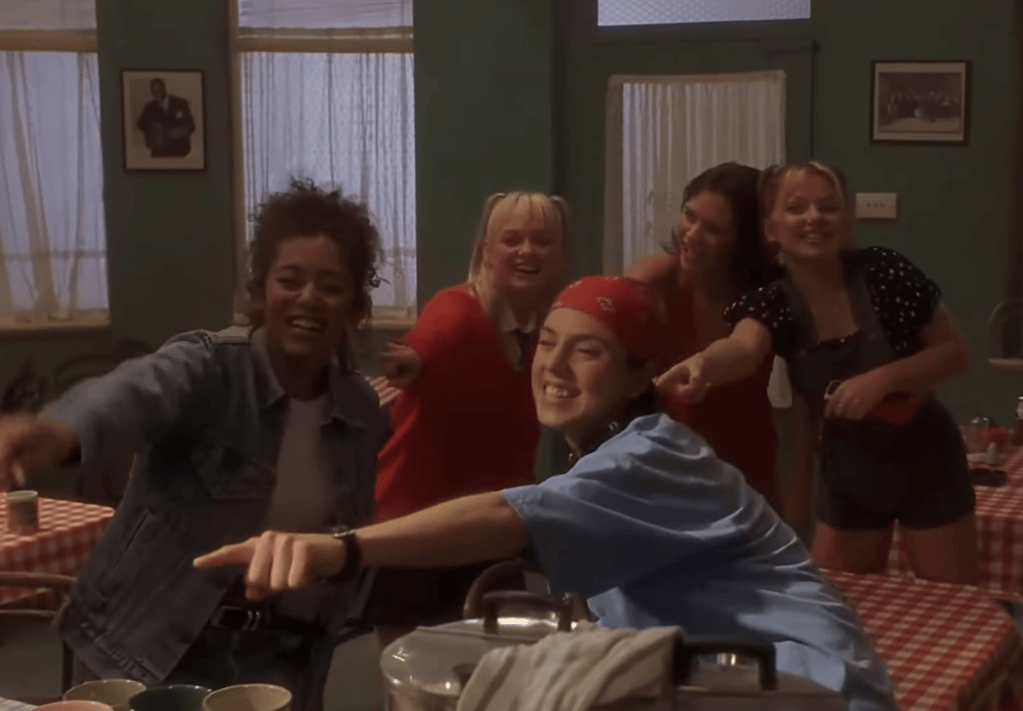
The lyrics establish the dominance structure in the relationship. She, whichever she is singing/rapping/pointing and pouting at the camera (we’re looking at you here, Vicky), states unequivocally that romance is on her terms, and frontloading the sentence with the subordinate clause only reinforces who is holding the leash. See how different it sounds when you switch the order of the clauses:
- “If you wanna be my lover, you gotta get with my friends”
- “you gotta get with my friends if you wanna be my lover”
Now that I think about it, the song’s video is probably a better explanation than this post. The conditional subordinating conjunction if is the doorman who tries to stop them getting into the snooty club. The subordinate clause you wanna be my lover is the maitre’d, with his list of bookings and rules about wearing a blazer. Once they’re past those, they’re into the club and the main clause you gotta get with my friends, where the fun happens.
Damn. I wish I’d thought of that metaphor an hour ago.
The Cure, “Lovesong”
“Lovesong”, the most plaintively ordinary love song Robert Smith has ever written (his sentiment, not mine), shares almost exactly the same structure but the mood is markedly different. Let’s sit with that for a moment; there are fewer differences between “Lovesong” and “Wannabe” than you might think.
However, instead of gleeful girl power, “Lovesong” is suffused throughout with an almost paranoid, obsessive love for the song’s subject, Smith’s now-wife, then-fiancée Mary. “Whenever”, “however” and “whatever” are the subordinating conjunctions, acting in temporal and spatial ways and contrasting to the conditional use of subordinating conjunctions in “Wannabe”.
Or in layman’s terms, “Lovesong” make you sad when “Wannabe” pulls off the same trick but makes you absurdly happy. But that’s okay – like Sally Sparrow said, “sad is happy for deep people”.
This time, the lyrics are frontloaded with subordinate clauses full of sadness and longing. The main clauses counterpoint the subordinate clauses to provide relief but the effect never becomes anything approaching joy or happiness, because you’re only ever a bar or two away from another desperate subclause.
- “Whenever I’m alone with you…” – the lines that use “whenever…” describe the times when he’s at home, during a period of his life when he’s talked about the pressures of his career and nearing the age of 30, and Mary being the antidote to those ills.
- “Whatever words I say, I will always love you” – the one line that uses “whatever” is the line that bridges proximity and distance, and remains true no matter whether they are together or apart.
(Of course there’s also “However far away…” – the lines that seem to describe the time spent away from Mary with the band – but here “however” isn’t actually a subordinating conjunction, it’s a subordinating adverb and it modifies “far away”. Technically different, but the same effect.)
Used with imagination, the position can change the mood and experience to an incredible degree and you can have a lot of fun with it, but enough about D/s relationships. The main thing to remember is that the subordinating conjunction helps to link thoughts and ideas within a sentence.
You know, the ancient Greeks would have loved both of these songs. They are stuffed with rhetorical devices that have been in use for literally thousands of years:
- Anaphora: the deliberate repetition of a word or phrase at the beginning of a sentence
- Hypotaxis: sentences that are constructed from multiple clauses
- Isocolon: sentences or phrases that replicate length, structure and/or rhythm (such as “However far away, I will always love you / However long I stay, I will always love you”)
Trust me – the Ancient Greeks would have been zig-a-zig-ahing all the way to Delphi.


Leave a comment